


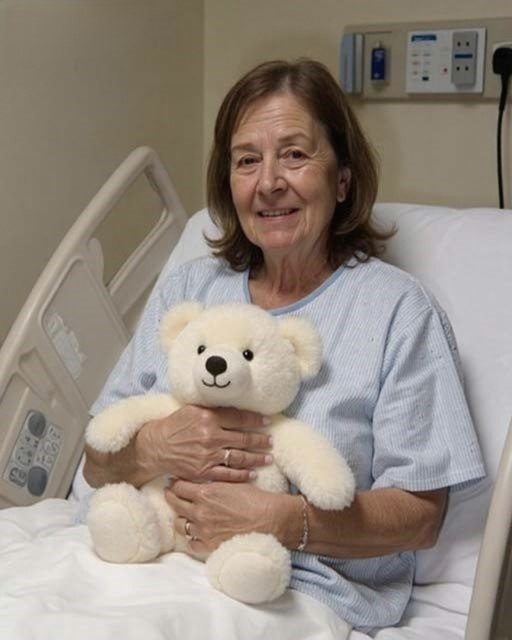
Just tired.”
Laura gave me a pointed look, and I stepped back reluctantly. The nurse came in a moment later, and Laura used the excuse to usher me out of the room. “We’ll talk later,” she said briskly.
“Mom needs peace.”
Outside, I clenched my fists. I wanted to scream at her—to ask what right she had to act like the gatekeeper to our mother’s life. But I didn’t.
Not yet. Weeks passed. Mom’s condition worsened.
I called daily, texted, even begged to visit. Sometimes Laura replied, sometimes she didn’t. When she did, her messages were clipped:
She’s stable.
Don’t worry. The doctor says it’s just fatigue. I’ll let you know if there’s any change.
The silence between us grew heavy until it felt like we were strangers instead of sisters. Then, one Tuesday morning, I got the call. It was the hospital.
Mom had been admitted again overnight. The nurse told me she was in critical condition. When I arrived, Laura was already there, sitting in the corner with a cup of coffee and her phone.
Her face was composed, but her eyes were red-rimmed. I stepped toward the bed, my throat tightening. Mom was pale and still, an oxygen tube tracing across her cheeks.
“Why didn’t you call me?” I whispered. Laura didn’t look up. “It all happened fast.”
The nurse entered, adjusting the IV.
“Your mother’s been in and out of consciousness,” she said gently. “She asked for both of you earlier.”
I turned to Laura. “She asked for me, and you didn’t tell me?”
“She wasn’t coherent,” Laura snapped.
“She barely knew what she was saying.”
The nurse gave her a disapproving glance but said nothing. I sat by Mom’s side and held her hand. Her skin was paper-thin, her breathing shallow.
She opened her eyes slowly, searching for something or someone. When she saw me, her lips parted, and she exhaled a faint, broken sound. “Mom,” I whispered.
“I’m here.”
Her hand trembled slightly in mine. I leaned closer, trying to hear her, but her voice was barely audible. “Love… you both,” she breathed.
I felt a lump rise in my throat. “We love you too,” I whispered back, tears spilling down my cheeks. Mom’s eyes closed again, and I sat there until her breathing steadied.
She passed away three days later. I was there when it happened, but Laura wasn’t. She’d gone to get coffee.
I don’t think she expected the end to come so soon. The nurses were kind, helping me through the paperwork. One of them, a middle-aged woman with kind eyes, pressed a folded envelope into my hand as I sat in the waiting room afterward.
“Your mother asked me to give this to you,” she said softly. “She said it was important that you have it.”
My hands shook as I took it. The envelope was thin, my name written on the front in Mom’s familiar handwriting.
When Laura returned, I tucked it into my bag. “She’s gone,” I told her quietly. For a moment, the mask slipped.
Her face crumpled, and she let out a small sob. But it was fleeting. Within minutes, she was back to her usual, composed self, calling the funeral home, organizing flowers, speaking to the doctor like she was managing a corporate event instead of our mother’s death.
I watched her, feeling a strange mixture of grief and resentment. The funeral was small, just family and a few close friends. Laura made sure everything was perfect: the floral arrangements, the hymns, the framed photos.
She greeted every guest with practiced grace, accepting condolences as if they were compliments. I stayed in the background, lost in my thoughts. That night, after everyone left, I sat alone in Mom’s old house, surrounded by the faint scent of her perfume and the quiet ticking of the kitchen clock.
Laura had gone to stay with her fiancé, promising to “handle the estate matters later.”
I took out the envelope. Inside was a handwritten letter. My chest tightened as I unfolded it.
“My dearest Julia,
If you’re reading this, it means I’ve already gone. I know you and your sister have never seen eye to eye, and I’ve tried my whole life to bridge that distance between you. When I got sick, I asked Laura to stay because I knew she needed to.
She’s always believed love is something she has to earn—and I let her believe that for too long. But I never loved her more than you. She kept you away because she thought she was protecting me, but also because she couldn’t face the guilt of how she’s treated you over the years.
I know that hurt you, and I’m sorry for it. There’s something I want you to know. I’ve made arrangements for the house to go to both of you equally.
But I’ve left you a separate account—the one your father and I opened for you when you were born. Laura doesn’t know about it. The details are in the lawyer’s office.
I wanted you to have something of your own, not out of fairness, but because I trust you’ll use it wisely. Don’t let bitterness consume you. Your sister is not your enemy—she’s a frightened woman who hides behind control because she doesn’t know any other way to be loved.
Take care of each other, even if it’s hard. That’s my last wish. Love always,
Mom.”
Tears blurred my vision.
I read the letter over and over until the words etched themselves into my heart. Mom had seen everything, every lie, every manipulation, every wound, and still, she’d chosen compassion. I spent that night thinking about her words.
The next morning, Laura came by to “discuss logistics.” She was wearing her usual immaculate blouse and had already drafted a checklist. “The house will need to be appraised,” she began briskly. “There’s also Mom’s jewelry and her savings, though I assume she didn’t leave much.
I’ve already spoken with the lawyer about splitting assets.”
“She left me a letter,” I said quietly. Laura froze, her pen hovering midair. “A letter?”
“Yes.”
“What did it say?”
I studied her face.
There was anxiety there, real, unguarded. “She said she loved us both,” I replied carefully. “And that she wanted us to take care of each other.”
Laura looked away.
For the first time, I saw her confidence falter. “She said that?”
I nodded. “She also said she asked you to stay because you needed it.”
She blinked rapidly, as if trying to process that.
Then she exhaled and sat down heavily on the couch. “I thought… if I did everything right, maybe she’d finally see that I could handle things,” she whispered. “After Dad left, I saw how broken she was.
I wanted to fix it. I thought being the one to take care of her would make up for everything.”
“Laura,” I said softly, “Mom didn’t need you to prove anything.”
Her eyes filled with tears. “I didn’t mean to keep you away.
I just… didn’t know how to share her.”
For a long moment, neither of us spoke. The only sound was the ticking of the old wall clock. Finally, I said, “We can still do what she asked.
Take care of each other.”
She gave a small, broken laugh. “You’d really want to do that after everything I’ve done?”
“I think that’s what Mom wanted,” I said simply. Laura wiped her eyes.
“You always were the forgiving one.”
“Maybe,” I said. “But I’m also tired of being angry.”
In the weeks that followed, we began sorting through Mom’s things together. It was awkward at first—years of resentment don’t vanish overnight—but slowly, something shifted.
We found old photo albums, birthday cards, and handwritten recipes. For the first time in years, we laughed together—really laughed—at the little memories we’d forgotten. When the lawyer finally read the will, Laura was stunned to learn about the separate account.
She turned to me afterward, eyes glistening, and said, “She trusted you more than she ever trusted me.”
“That’s not true,” I said. “She just knew what we needed.”
For once, she didn’t argue. A few months later, I visited Mom’s grave alone.
The sun was setting, painting the sky in soft streaks of orange and gold. I laid a single lily on the grass and whispered, “You were right, Mom. It’s hard—but we’re trying.”
Behind me, footsteps crunched on the gravel.
I turned to see Laura standing there, holding two cups of coffee. “Brought you your favorite,” she said, offering one. I smiled faintly.
“Thanks.”
We stood side by side, sipping quietly. After a while, Laura said, “You know, I found something in Mom’s dresser. A picture of us from when we were kids.
She’d written on the back—‘My two girls, always together, even when they don’t know it.’”
I felt a lump form in my throat. “Maybe she knew this would happen,” I said softly. “Maybe,” Laura replied.
“Or maybe she just hoped.”
We stood there a little longer, the wind rustling through the trees, carrying the faint scent of lilies. For the first time in years, I felt peace—not the kind that comes from resolution, but the quiet kind that grows when you finally stop fighting the past. Mom had always said love doesn’t disappear; it just changes form.
I think I finally understood what she meant. Because even in death, she’d managed to bring us back to each other. And that was her greatest act of love of all.

