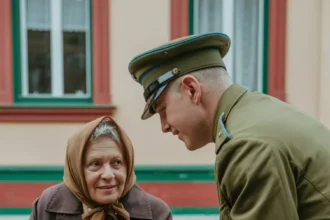





James hardly spoke to her, treating her more like part of the furniture than a person. But I never forgot. And neither did she.
The marriage worsened as the years dragged on. James’s greed grew insatiable. He bought a second car, then a third, even when we didn’t need them.
He hosted parties just to parade his possessions in front of coworkers, desperate for their admiration. He never cared about whether I was happy; he only cared about whether I looked like the perfect accessory. I tried to leave twice before.
The first time, he promised things would change. The second, he threatened to make my life miserable if I dared to walk away. I stayed, but in my heart, I began planning.
I realized something important: James could never walk away from material wealth. He didn’t care about me, but he cared about appearances. If I fought him in court for the house, the cars, or the money, he’d drag the divorce out endlessly.
He’d bankrupt us both just to “win.”
So I decided to let him have it all. Every last thing. Because what James didn’t know was that none of it truly belonged to him.
In the months leading up to the divorce, I played the part of the submissive, tired wife. I stopped arguing about his purchases. I let him believe he was smarter, stronger, richer.
And when I told him I wanted out, he jumped at the chance to make himself look victorious. During negotiations, his lawyer demanded everything: the house, the cars, the bank accounts, even heirlooms from my side of the family. My lawyer looked at me like I was crazy when I nodded along and agreed.
James thought he’d crushed me. He thought I was giving up because I had no fight left in me. He had no idea I was laughing inside the entire time.
Because the house wasn’t his to keep—not really. He had forgotten the agreement he’d made with my mother, the condition she had attached to the down payment. Legally, she had a life estate written into the deed.
That meant no matter who “owned” the house on paper, my mother had the right to live there until the day she died. And she wasn’t planning on leaving anytime soon. The day after the divorce, James moved back into the house with triumphant fanfare.
He popped champagne, invited friends over, and bragged about how he had walked away with everything. He didn’t even notice my mother sitting quietly in the corner of the living room, sipping her tea as his guests trailed through the house. It only took a week for reality to dawn on him.
My mother, who had always kept to herself while I lived there, suddenly decided to enjoy the full scope of her rights. She cooked with fragrant spices that clung to the curtains, invited her bridge club over twice a week, and watched television at a volume that rattled the walls. She planted herbs in the front yard, humming to herself as James fumed about “curb appeal.”
And when he tried to demand she leave, she calmly pulled out the deed, complete with her life estate clause, and smiled sweetly.
“I’ll be here as long as I live, James. You agreed to that, remember?”
He didn’t remember. Because he had never cared enough to pay attention.
Meanwhile, I was settling into a modest apartment across town, finally free. I poured myself into my consulting business, which blossomed now that I wasn’t constantly catering to James’s ego. Clients valued my creativity and independence, and soon I was earning more than enough to support myself comfortably.
Every so often, I’d hear whispers about James. How he was struggling to keep up appearances now that his “dream house” came with an unexpected roommate. How his friends stopped visiting when they realized they couldn’t throw wild parties under my mother’s watchful eye.
How the once-pristine house now smelled perpetually of garlic and garden soil. The cherry on top came a year later when James tried to sell the house. The realtor explained that no buyer would pay top dollar for a property with a legally protected elderly tenant who had no plans of leaving.
The offers he got were laughable—far below what he had expected. He was furious. And I laughed again.
One evening, as I sat with my mother on the patio of her ever-thriving garden, I asked her if she ever regretted tying herself to the house. She chuckled softly, her eyes twinkling. “Darling, I didn’t give him money for that house.
I gave it to you. And in a way, I still have.”
She was right. That house was never truly James’s, no matter how many documents he signed.
It was a gilded cage, one he had fought tooth and nail to keep, only to find it filled with thorns. I had walked away with nothing on paper, but everything in spirit. My freedom, my dignity, my peace—and the satisfaction of knowing that James’s greed had trapped him in exactly the prison he built for himself.
It’s been three years now. My business has flourished. I’ve traveled, painted, and reconnected with old friends.
My life is smaller in scale but infinitely richer in meaning. James, on the other hand, still lives in that house with my mother. His once-glamorous reputation has faded, his finances stretched thin by his obsession with keeping up appearances.
Sometimes people ask if I regret giving him everything in the divorce. I smile and shake my head. Because the truth is, I didn’t give him everything.
I gave him nothing of value. And that was always the plan.