



When you live in the same house for over fifty years, it becomes more than just a place to sleep. It becomes a piece of your identity, a part of your soul. My late husband, George, and I built this little brick house back in the early seventies.
We were young then, full of hope and ambition. The neighborhood was nothing but farmland and dirt roads, but George saw potential. He was a carpenter by trade, meticulous with his hands, and I loved flowers and gardens.
Together, we turned an empty plot of land into a warm home surrounded by one of the greenest lawns in town. George passed away ten years ago, and since then, caring for the house and the lawn has been my way of keeping him close. I’m in my seventies now, and while my knees complain and my back isn’t what it used to be, I still rise early every morning to water the grass, trim the edges, and prune the rose bushes.
My lawn has always been my pride. Neighbors would walk by and compliment how lush and even it looked. Children would run barefoot across it in the summer, and I’d smile because George always said a lawn wasn’t just for looking at—it was meant to be lived on.
So when the new neighbors moved in across the street, I welcomed them in the way I always had. I baked a pie, walked it over, and introduced myself with a smile. They were a young couple, probably in their late twenties, with a shiny new pickup truck that seemed far too big for the narrow driveway of their rental house.
Their names were Rick and Kayla. At first, they seemed polite enough. Kayla accepted the pie with a forced smile, and Rick gave me a half-hearted nod before disappearing back inside.
I brushed it off, young people were often busy settling in, and I figured they’d warm up eventually. But two days later, I woke to the rumble of a truck engine. I peered through my curtains and nearly dropped my coffee.
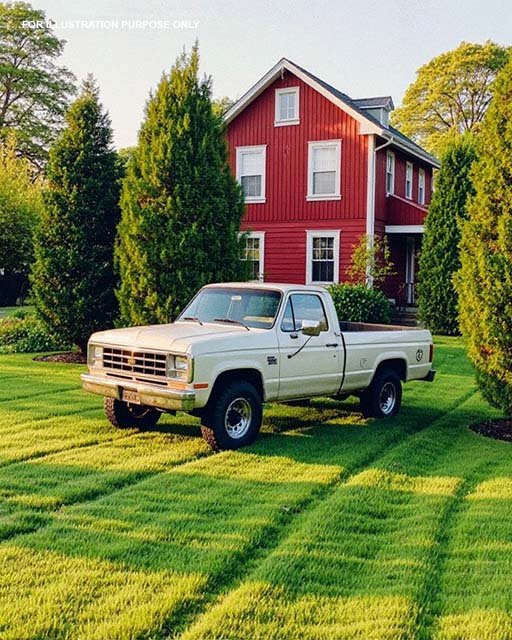
There, right in the middle of my perfect lawn, sat their oversized truck, tires pressing deep into the soft green grass George and I had nurtured for decades. At first, I thought maybe it was a mistake. Maybe their driveway was blocked, or maybe they just needed a quick place to park while unloading.
So I waited. An hour passed. Then two.
By mid-afternoon, the truck was still there, leaving ugly grooves in the soil where the tires had sunk. I marched across the street, cane tapping against the pavement, and knocked on their door. Kayla answered, chewing gum loudly, her phone in her hand.
“Hi,” I said, trying to keep my voice calm. “I just wanted to let you know that your truck is parked on my lawn. Could you please move it?
I’ve spent a lot of time keeping it nice, and the grass is fragile.”
She glanced past me toward the truck, then shrugged. “Yeah, Rick said the driveway’s too small. We’ll move it later.”
I forced a smile.
“I’d appreciate if you could move it now. The longer it sits, the more damage it does.”
She rolled her eyes, muttered something I couldn’t catch, and shut the door without another word. The truck stayed there until evening.
When they finally moved it, the once-pristine patch of lawn was torn up, the grass flattened and mud tracks scarred into the earth. I spent the next morning trying to repair the damage, reseeding the patches and gently pressing the soil back in place, but the marks were clear. I thought maybe that would be the end of it.
The story doesn’t end here — it continues on the next page.
Tap READ MORE to discover the rest 🔎👇