


Inside the box was a simple, worn notebook. The cover was faded, its edges frayed from years of handling. Yet, as I opened it, I was enveloped by the old woman’s presence, as if she were sitting beside me, sharing her story.
Each page was a window into her soul, revealing a tapestry of memories, thoughts, and dreams she had never shared in words. Her name was Margaret, though she had always insisted I call her Maggie. The first entry in the notebook was dated over six decades ago, a young woman’s musings about life, love, and aspirations.
She had been a writer, it turned out, her words flowing with elegance and depth. As I read, I could picture her in her youth, full of hope and promise. Maggie had traveled the world, living in cities that thrummed with life and rural corners where the days slowed down.
Her life was a mosaic of experiences, each more vibrant than the last, yet the pain of loss was ever-present in her writings. She had loved deeply and lost profoundly, each loss chiseling away at her spirit until she found herself alone on Maple Street. Through the pages, Maggie’s gratitude for our shared meals was palpable.
“Today, she brought me soup,” one entry read. “It warmed more than my stomach—it warmed my heart. She doesn’t realize that her kindness is a lifeline.”
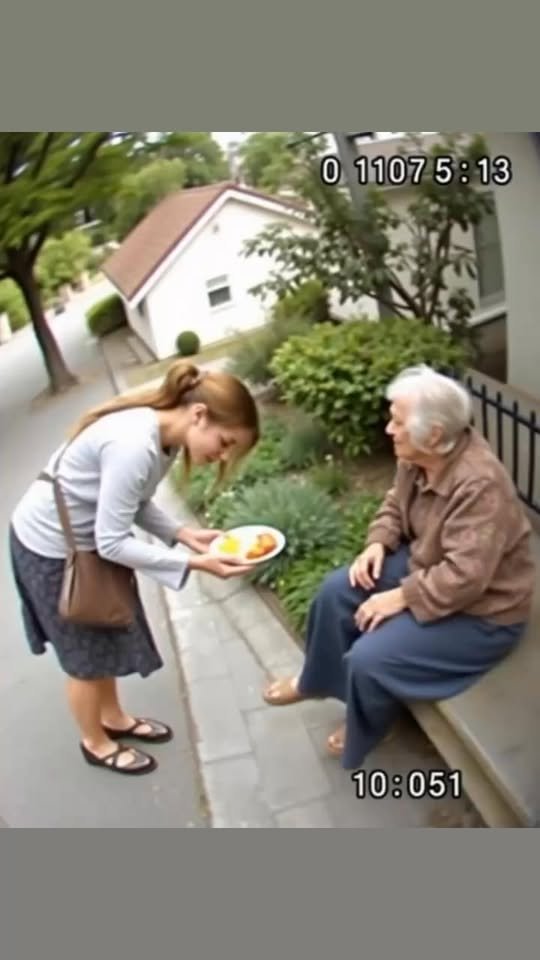
Every day that I had stopped by, meals in hand, Maggie had crafted a legacy of words, creating poetry from our simple exchanges.
Her writings were a testament to the power of human connection and the profound impact of kindness. In her solitude, she had found solace in the knowledge that someone saw her, that someone cared. In her final note, Maggie wrote, “To my dear friend, who gave me light in the darkness: This is my story.
It’s yours now, too. May it inspire you to see the unseen and love the unloved.”
My heart ached as I closed the notebook, tears blurring my vision. Maggie’s gift was more than words.
It was a reminder of the beauty found in simple, human connections—the kind that transcends age, circumstance, and time. Her life, once seemingly invisible, now shone brightly through her words, a beacon of hope and resilience. As the days passed, I shared Maggie’s story with our neighbors, her words breathing life into the street that had once ignored her.
The air seemed lighter, and the neighbors began to notice one another in new ways, small nods and smiles exchanged as they passed by. In feeding Maggie, I had not only nourished her body but had unwittingly helped her spirit flourish. In return, she had given me a gift that transcended material wealth.
Maggie’s legacy lived on, her words a constant reminder that the smallest actions can leave an indelible mark on the world. Though Maggie’s chair remained empty, her presence lingered—her story forever intertwined with mine, inspiring acts of love and compassion in a world that often rushes by, too busy to notice the beauty in the lives of those around us.