


“The lady in the red dress. She was here the first time I came. She sat on that bench and told me this was a safe place.
That I could talk here.”
My knees buckled. I had to sit. “Red dress?” I asked.
“You mean a woman actually talked to you here?”
“Yeah. But only that once. She had a big braid and red bangles.
Like the ones in the Bollywood movies.”
That was Malini’s favorite dress. She wore it the last time we danced—at our niece’s wedding. I remembered how she’d spun in it, laughing at how the skirt flared out like a movie star.
But this boy couldn’t have known that. “What’s your name, son?” I asked. “Reza,” he said.
“Reza what?”
He hesitated again. “Reza Imtiaz.”
And suddenly it clicked. Imtiaz.
That was the last name of Malini’s old coworker from the school district. A kind woman who used to visit during Malini’s chemo days, always bringing samosas and soft music playlists. She’d bring her little grandson once in a while—a shy toddler with huge eyes who never talked.
“Your grandmother,” I said. “Mina?”
He nodded slowly. I let out a breath.
Pieces started slotting in. “You’ve been taking the roses?” I asked. He looked ashamed.
“Only because she said it was okay. The lady in the red dress.”
I stared at him. “She said they were from someone who loved her very much,” he continued.
“She said I could borrow them. That they were meant for someone who needed love.”
And that’s when my throat closed up. Borrow.
Not take. Borrow. “What do you do with them?” I asked.
“I bring them to the hospital,” he said. “To my mom. She’s been sick.
They don’t let me bring too much in, but flowers are allowed if they’re wrapped.”
I had to look away. This kid wasn’t stealing. He was trying to give someone hope.
We sat in silence for a while. “Where’s your mom now?” I asked finally. “Still in recovery.
They say she’ll be okay. But it was scary for a while.”
“I’m sorry.”
He nodded. “It helped, talking here.
Even when she wasn’t around, I felt like she was listening.”
The wind picked up. A dry leaf skittered across the headstone. I pulled out my phone and opened my photo album.
“This was her,” I said, showing him a picture of Malini at the beach, hair flying, wide smile. He smiled. “That’s her.
That’s the lady.”
My hands went cold. He wasn’t lying. He couldn’t be.
“How’d you get the locket?” I asked, my voice thin. “Oh,” he said. “It was under the bench one day.
I thought it was lost, but… I don’t know. It felt like it was for me.”
I didn’t tell him the locket had been buried. Maybe some things don’t need explaining.
Instead, I told him something else. “She would’ve liked you. She always said kids with quiet hearts grow into people who move mountains.”
He smiled shyly.
“She said something like that to me too.”
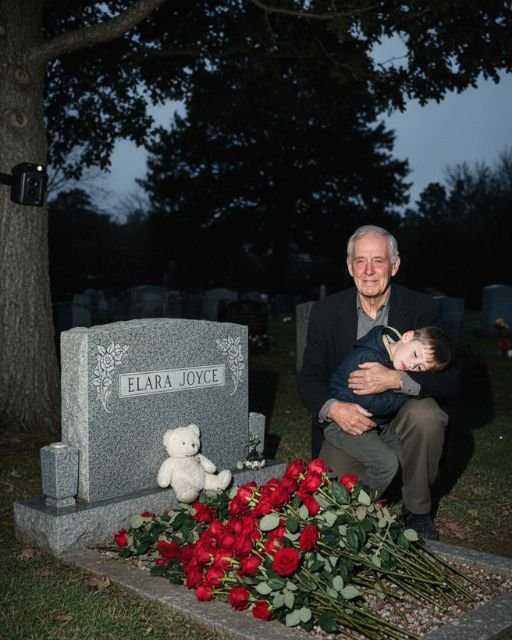
We made a deal, right there. Every Sunday, I’d bring two bundles of roses. One for Malini.
One for Reza’s mom. Wrapped in the same brown paper, tied with twine. And every Sunday at 3:30, we’d meet.
Sit. Read. Remember.
It became our thing. By December, his mom was out of the hospital. She came to the cemetery once, walked slow, breathing deep.
She thanked me for the flowers, though I didn’t say much. Just nodded and smiled. One day, Reza brought me a folded paper.
A poem. His own. It wasn’t fancy.
But it was real. The last lines stuck with me:
“She told me love doesn’t end / It just finds new places to land.”
I cried in my car after he left. I kept bringing the roses, even after Reza stopped coming regularly.
He moved across town. His mom got better. But he wrote me sometimes.
And every birthday, he left one rose on Malini’s grave. I never caught him doing it. But I knew it was him.
And the locket? I let him keep it. Some things don’t belong buried.
Some things are meant to be carried forward. Life doesn’t always give you what you expect. But sometimes, in the strangest corners, it hands you back a piece of what you thought you’d lost.
If this story moved you, please like and share it. You never know who needs to read something like this today.