



The scent of lavender and old books—the scent of our home—was the last thing I remembered before the world became a sterile, white blur. For ten years, Julian had been my world. We had built a life together, or so I thought, in the sprawling house my parents had left me, a sanctuary of inherited memories and quiet wealth.
He was charming, ambitious, and, I believed, utterly devoted. My only flaw, in his eyes, was my “fragile emotional state,” a narrative he had spent years carefully constructing, brick by insidious brick. It began subtly, like a slow poison.
Misplaced keys would reappear in my coat pocket after I’d spent an hour in a frantic search. “You’re getting so forgetful, darling,” he’d say with a gentle, concerned smile, his voice like velvet wrapping around a stone. Important appointments he swore he never told me about would lead to missed opportunities and apologies I had to make on his behalf.
He would whisper to our friends about my “anxiety” and “mood swings,” always framing it as the loving concern of a long-suffering husband. He was an artist, and my sanity was his canvas, each stroke of doubt a masterpiece of manipulation. The public unveiling of his work came during our annual charity gala, an event I used to adore.
He had spent the week before making small, cutting remarks—about my choice of dress (“A bit drab, isn’t it, Elara?”), my speech (“Are you sure you’re up for it? You’ve been so on edge.”), my contributions (“Let me handle the details, love. You just focus on looking pretty.”).
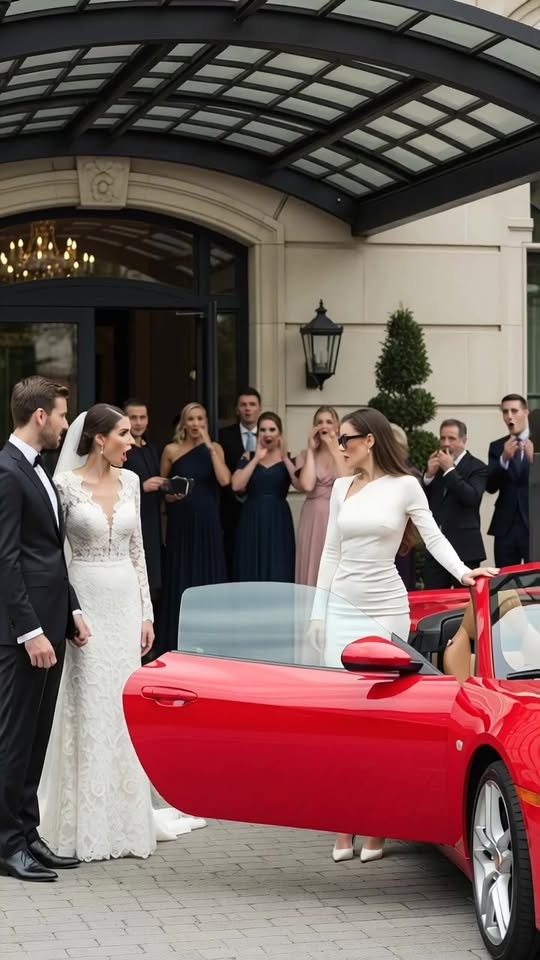
By the time we arrived, I was a bundle of nerves, second-guessing every word and gesture. It was there he introduced me to Isabelle Worthington, the daughter of a business magnate whose company he was desperate to merge with. She was polished, cold, her smile a perfect, geometric shape that never reached her eyes.
She looked at me with an unnerving, clinical pity, as if I were a patient she was observing. Julian spent the evening at her side, a study in charismatic ambition, leaving me to drift through the crowd, feeling increasingly isolated and invisible. When I finally approached him, my voice trembling with a mix of hurt and frustration, he turned my private pain into a public spectacle.
“Elara, darling, please,” he said, his voice loud enough for the nearby clusters of guests to turn and stare. “Not here. Let’s not make a scene.
You know how you get when you’re overwhelmed.” He put a firm arm around me, a gesture that looked protective to outsiders but felt like a cage to me. Isabelle looked on, her expression one of perfect, rehearsed sympathy. The trap was sprung, and I was the only one who felt its teeth.
That night, he sat on the edge of our bed, his face a mask of profound sorrow. He held my hands, his touch now feeling alien. “I think you need a break, my love,” he said, his voice a soothing lullaby of deceit.
“A place to rest. A wellness retreat. I’ve found a wonderful place, secluded and peaceful.
Just for a few weeks, to get your strength back. I can’t bear to see you like this.” I was so exhausted from his years of psychological warfare, so convinced of my own brokenness, that I agreed. I believed I was a fractured thing, and he was the only one who knew how to piece me back together.
The story doesn’t end here — it continues on the next page.
Tap READ MORE to discover the rest 🔎👇