



Hadley came on a Thursday afternoon. She told me CPS had visited Salome’s apartment but couldn’t confirm anything. Salome had been calm and cooperative, the place was spotless, and there was no sign of abuse or stolen items.
Dariel, when asked directly, said nothing was wrong. He even smiled and said he loved his mom. I was stunned.
“But the bruises—”
“They didn’t see any fresh ones,” she replied, sounding as frustrated as I felt. “And without a direct disclosure or evidence, they can’t remove him.”
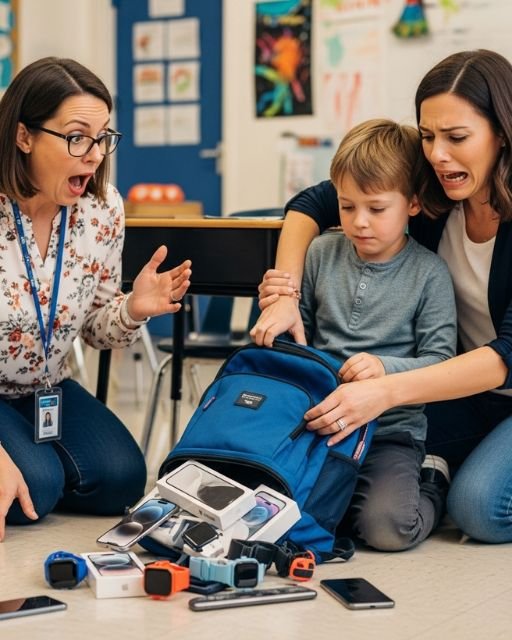
That night, I barely slept. I kept replaying the image of those brand-new phones and watches, wondering where she got them.
Something about the whole thing felt wrong—like she was involved in something bigger than just bad parenting. I had a nagging suspicion that it wasn’t just neglect. It was something darker.
The next week, a letter arrived at the school, addressed to me, in a child’s handwriting. It wasn’t in an envelope—just folded over and taped shut with a little dinosaur sticker. Inside, the words were scrawled in pencil, uneven and hard to read.
“Miss, please help me. My mom makes me take things from people’s bags when they’re not looking. If I don’t, she gets mad and burns my arms with the curling thing.
I can’t tell anyone because she says I’ll go to jail and never see my cat again. Please don’t tell her I wrote this. Please.”
My heart shattered in that moment.
I brought the letter straight to Mrs. Hadley. This was a direct disclosure—written, not spoken, but still clear enough to warrant action.
CPS was called again, and this time, they didn’t leave it to a friendly visit. The police got involved. Salome was arrested the next day.
Turns out, she was running a small but profitable theft ring using her own child. She would scope out gyms, libraries, cafes—anywhere with loose bags or coats. Dariel, small and quiet, would be sent in to swipe phones, wallets, anything of value.
She’d taught him how to unzip bags silently, how to fake being lost or sick if someone noticed him. The bruises weren’t from tables—they were from a curling iron she used when he messed up or hesitated. The iPhones in his backpack were just the tip of the iceberg.
I didn’t see Dariel for a while after that. CPS placed him in temporary care, and the case went to court. I followed every update I could get, always asking Mrs.
Hadley if she’d heard anything. Weeks passed, then months. One rainy morning in February, I walked into my classroom and stopped in my tracks.
There he was. Sitting at the back, arms folded on his desk, looking right at me. Dariel.
His hair was a little longer, and he wore a hoodie that looked two sizes too big. But he smiled. It was small and cautious, but it was a smile.
The first one I’d ever seen from him. He walked up to me during recess and handed me another note. “Thank you for helping me.
My new foster mom has a cat. It sleeps in my bed. I don’t get burned anymore.
I still get scared, but not like before. I want to be a helper when I grow up. Like you.”
I cried right there on the playground.
Dariel stayed in our school for the rest of the year. His foster family was kind and patient. He started speaking more, making friends.
His reading improved. He even joined the art club and painted a picture of a giant blue dinosaur wearing sunglasses. It won first place in our hallway showcase.
By the end of the year, you wouldn’t have recognized him as the same boy who once flinched at shadows. That summer, I got another note. This one came by post, stamped and everything.
Dariel had been adopted by his foster family. He was changing his last name. Starting fresh.
His message was simple: “You saved me.”
I keep that note in my desk drawer. Sometimes, teaching feels like shouting into a void. You try your best, but you wonder if you’re actually helping anyone.
But Dariel reminded me that even quiet kids are telling us things. You just have to learn how to listen with your eyes, with your heart. Not every child has the words.
And not every monster looks like one at first glance. Salome ended up serving time. Not just for theft, but for child endangerment and abuse.
I heard she tried to blame everything on Dariel. Said he had a “stealing problem” and made up stories for attention. But the evidence—Dariel’s letter, the items recovered from her home, the marks on his skin—told the real story.
I won’t lie, there were moments I wondered if I should have done more, sooner. But I remind myself that it’s not about being perfect—it’s about being present. Watching.
Noticing. Asking twice when something doesn’t sit right. Dariel’s story could have ended in tragedy.
But instead, it ended in safety. In healing. In a little boy finally getting to be a kid.
And I’ll never forget what he taught me. If something feels off—it probably is. Trust your gut.
Speak up. Push back, even when it’s uncomfortable. Because sometimes, just one adult paying attention can change a child’s whole life.
If this story touched your heart, please share it. You never know who might need the reminder to look a little closer, to care a little more.