


“You’re stressed because you don’t organize yourself. If you kept the house under control, maybe you wouldn’t feel overwhelmed.”
So I pushed through it. Through the exhaustion.
Through the growing pains. Through the fear that something was deeply wrong. I pushed until I couldn’t.
It happened on a Thursday. The girls were at school, and I was cleaning the kitchen. I remember reaching for a plate in the cabinet, and suddenly the room tilted.
My vision blurred into streaks of white. A sharp pain shot through my chest, then my arm. My breath shortened into quick, terrifying gasps.
I tried calling Paul, but he didn’t answer. He later said he was in the middle of grading. My hands shook so violently that I dialed 911 almost on instinct, using the counter to keep myself upright until the operator told me to lie down on the floor.
The paramedics arrived minutes later. By then, I was drenched in sweat, heart pounding erratically, the edges of the world closing in. They loaded me onto a stretcher.
One of them asked if there was anyone to notify. I whispered Paul’s name and number, but everything after that blurred as the sirens wailed. Before they rolled me out the front door, I managed to reach the hallway table where I kept a pen and memo pad.
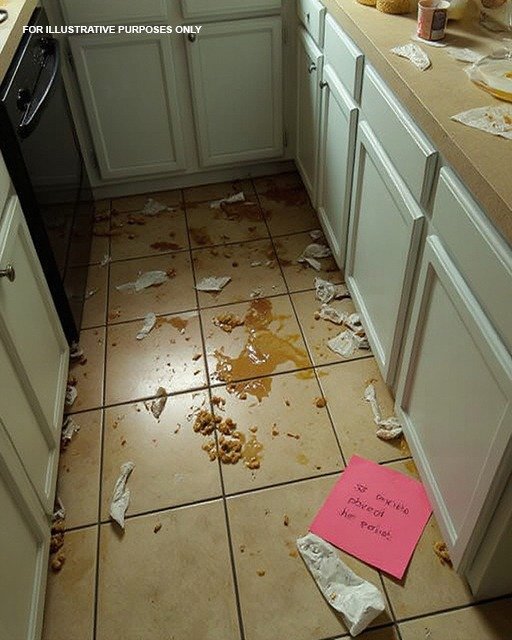
With shaking hands, I scribbled three words on a torn sheet of paper:
“Please feed the girls.”
It was the only thing I could think about—their dinner, their routine, the things I usually handled. The things I knew he would forget without prompting. I left the note on the kitchen counter.
Then the world went dark. When I woke up at the hospital, I was hooked up to monitors. A nurse explained that I had suffered a severe cardiac event triggered by prolonged stress.
She said my blood pressure had spiked dangerously high. She asked if I had been overwhelmed or exhausted recently. I laughed a dry, humorless sound because how could I possibly condense the last five years into a single answer?
Paul arrived an hour later. He looked panicked, pale, shaken. “I came home and saw the ambulance leaving,” he said, voice trembling.
“And then I found your note.”
Something cracked in his voice on the last word. I stared at him, too tired to speak. He swallowed hard.
“Why didn’t you tell me you were feeling this bad?”
“I tried,” I said quietly. “You didn’t listen.”
He dropped into the chair beside me, burying his face in his hands. “I thought you were exaggerating,” he whispered.
“I thought you were just… being dramatic.”
“I wasn’t.”
When he lifted his head, his eyes were wet. He reached into his pocket and pulled out the note. It was wrinkled, stained with what looked like water, maybe tears.
He held it up with shaking fingers. “This is what broke me,” he said. “You were being rushed to the ER, and your first thought wasn’t calling me.
It was feeding the girls. Because you didn’t think I’d handle it.”
I didn’t answer. Silence stretched between us, heavy with all the years of things said and unsaid.
“I’ve been awful,” he whispered. “I’ve been selfish. I never saw how much you were doing.
I never wanted to believe I was the kind of man who’d let his wife collapse under the weight of everything.”
I looked at him, really looked at him. He was a man in free fall confronting a truth he had avoided for too long. “I’m sorry,” he said.
“I am so, so sorry.”
The words were sincere. I could hear it. But apologies don’t undo years of dismissal.
They don’t erase loneliness. They don’t heal wounds overnight. I closed my eyes.
“I need time.”
He nodded, tears slipping down his cheeks. “I’ll give you anything you need.”
I was in the hospital for three days. During that time, Paul stepped into the responsibilities I once shouldered alone.
He packed school lunches. He handled homework. He cleaned the house.
He cooked dinner. He booked appointments. He spoke with doctors, asking questions I had been too tired to think of.
The girls told me later that he burned the first night’s dinner and had to remake it three times. That he forgot where the extra towels were. He panicked when he couldn’t find Mira’s soccer uniform.
But they also said he tried. And for the first time, they saw that the work I’d done—quietly, invisibly—had never been “nothing.”
When I was discharged, the house looked different. Tidier, quieter, softer.
And Paul stood by the door, wringing his hands like a nervous schoolboy. “I want to do better,” he said simply. “I want a partner,” I replied.
“I’ll be one.”
“We’ll see.”
It wasn’t a promise. It wasn’t a rejection. Just a truth.
Recovery was slow. Some days, I felt strong enough to walk around the neighborhood. Other days, I stayed in bed, focusing on breathing.
The doctors insisted I needed to reduce my stress and workload significantly. They told Paul the same thing, but with sharper words. And he listened.
For the first time in years, I really listened. He began doing half the household tasks without being asked. He apologized again, this time not through words, but actions.
He took over the morning routine. He cooked meals, sometimes terrible, sometimes surprisingly good. He folded laundry and put it away.
He sat beside me during appointments, taking notes. He told the girls, in front of me, “Your mom has been carrying this family for years. I didn’t respect that.
I’m going to do better from now on.”
The first time he said it, my eyes filled with tears. Not because I forgave him instantly. But because the weight I had carried for so long finally began to lighten.
One evening, about six weeks after my hospitalization, we sat on the couch together. The girls were in bed, the house quiet except for the hum of the refrigerator. Paul turned to me.
“I read something online,” he said softly. “About emotional labor. About invisible work.
About burnout. About how spouses sometimes don’t understand what their partners are carrying.”
I raised an eyebrow, surprised. “And?”
“And I recognized myself.
All of it.” He swallowed. “I don’t know how to make up for what I did, but I’m committed to making sure you never feel alone like that again.”
There was a time that hearing those words would have made me melt. But now, I needed something steady.
And he seemed to understand that, too. He continued, “I’d like us to go to counseling. Together.
To learn how to communicate better. To learn how I can support you instead of draining you.”
A long silence passed. At last, I nodded.
“Okay.”
His shoulders sagged with relief. Not victory. Relief that the door to our future hadn’t closed entirely.
Counseling wasn’t magic. It was hard work. The kind that forced both of us to confront uncomfortable truths.
He learned how deeply his comments had cut. I learned how much resentment I’d buried. He learned how invisible labor had drowned me.
I learned how his own upbringing made him default to outdated expectations. Slowly, we rebuilt. Not the life we had before because that life had cracks we ignored.
But something new. Something healthier. Something we chose deliberately, not just fell into.
Months later, on a quiet Sunday morning, Paul walked into the kitchen where I was making tea. He looked hesitant. “I kept your note,” he said.
“I know.”
He reached into his wallet and pulled out the small, worn paper—creased, faded, but preserved. “Whenever I think I’m slipping into old habits,” he said, “I take this out and remember the day I almost lost you… because I refused to see you.”
I looked at the note. Three words.
Words written while my world blurred and my body gave out. Words that had terrified him into finally understanding. He placed the note gently on the table.
“I don’t ever want to be that man again.”
I touched the paper. Then I touched his hand. “You’re not,” I said softly.
“Not anymore.”
He exhaled shakily. And something unspoken settled between us—a sense of real partnership, fragile but growing, like a seedling pushing through soil after a harsh winter. Life isn’t a fairy tale.
Marriage isn’t perfect. We still argue sometimes. He still forgets things, and I still find myself tempted to take on too much.
But now, he sees me. He asks. He listens.
And together, we balance the invisible load I once carried alone. The girls notice the difference. They say the house feels calmer now.
Brighter. And sometimes, when I walk into the kitchen and see Paul making dinner while humming off-key, I feel a warmth in my chest I thought had long faded. Not because everything is fixed.
But because we changed. Because we chose to. Because a small note written on the worst day of my life became the turning point of our marriage—a reminder that love isn’t built on grand gestures, but on everyday care.
Looking back, I realize something important:
It wasn’t my collapse that changed things. It was the truth behind it. I wasn’t doing anything.
I was holding up our entire world. And now, finally, he holds it with me. Together.