




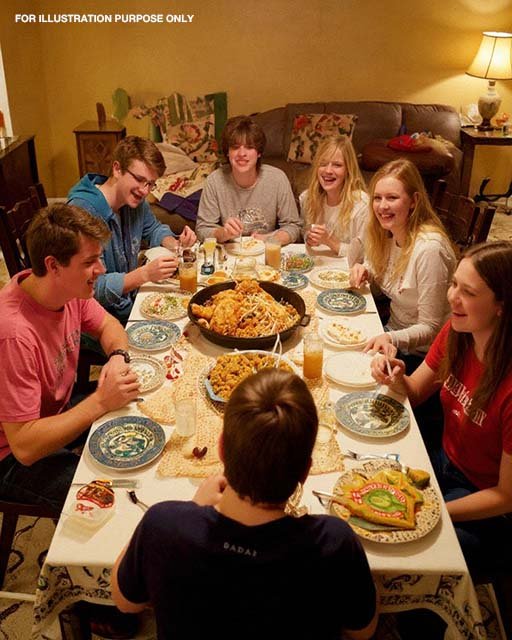
The relatives arrived as usual, chatting and greeting us with exaggerated warmth. Edith’s smile was tentative, but she agreed to let me handle the substitutions so she could focus on hosting without worrying about being judged. We began the meal, and I watched closely.
From the very first bite, the pattern was clear. Uncle Mark, who had always complained about the roast being “too dry,” barely flinched. Aunt Louise, who criticized Edith’s mashed potatoes for being “lumpy,” nodded and smiled approvingly.
Cousin Nina, notorious for her commentary on desserts, raved about the pie, unaware that I had swapped half the apples with pears. Edith and I exchanged glances. It was almost laughable how they were praising dishes that had been slightly altered.
The same relatives who had dissected her cooking month after month were now complimenting meals that, under normal circumstances, they would have found fault with. By dessert, the experiment had become unmistakable. Edith’s chocolate mousse had been prepared with a different type of chocolate than she usually used.
My aunt, who typically commented on the “intensity” of the flavor, said, “Edith, this is divine! You’ve outdone yourself.” Edith tried to hide a grin, but it broke into a full smile when she saw my satisfied expression. After the meal, once the relatives had left, we sat in the quiet of our dining room.
Edith leaned back in her chair, relief washing over her face. “Did you see that?” she asked, disbelief in her voice. “They didn’t notice a thing.
Every complaint they’ve made… It’s never been about the food. It’s me.”
I nodded, feeling a mix of anger and sadness. “It’s not about the cooking, Edith.
It’s about control. About making themselves feel superior. That’s why they criticize everything.
They don’t respect your effort—they just want to belittle you.”
She shook her head, tears forming again, but this time they were tempered by the truth we had uncovered. “I thought I was imagining it. I thought maybe I really was bad at this.”
“You’re incredible,” I said firmly.
“And they’ll never see that unless we teach them a lesson.”
We decided to experiment one more time before confronting them. For the next dinner, Edith prepared an even more elaborate meal. I again made subtle alterations, this time making the food almost unrecognizable in terms of ingredients but still edible.
We wanted to see if they were capable of honesty. When the relatives arrived, the ritual continued. Glasses clinked, conversation flowed, and plates were served.
The first bite was revealing. Uncle Mark chewed slowly, searching for the usual faults, but his expression remained neutral. Aunt Louise made the same “mm-hmm” noises she always did when she wanted to appear discerning.
By the time dessert was served, Edith and I were practically holding our breath. Cousin Nina tasted the mousse, which now had a subtle bitterness we had introduced. Her face contorted slightly, but instead of commenting on the flavor, she smiled and said, “Delicious, Edith!
You’ve really got a talent for desserts.”
We looked at each other in disbelief. This wasn’t just insensitivity, it was willful ignorance. They weren’t noticing the changes because they had already made up their minds: Edith was to be criticized no matter what.
Our suspicions were confirmed. Finally, we decided the test had revealed everything we needed to know. The next step was to confront them not with anger, but with evidence of their behavior.
At the following dinner, we invited the family over as usual. Edith served the meal she had prepared meticulously, every ingredient perfect. After everyone had eaten, I called for their attention.
“Before we clear the table,” I began, “I have something to share.” I passed around printed pages showing photographs and notes from the previous dinners: the ingredients I had swapped, the recipes altered, and the compliments they had given when the food had been changed. A stunned silence fell over the table. Edith added, her voice steady but cutting: “Every month, I’ve worked hard to make these dinners special.
Every month, some of you found fault, no matter what I did. But these records show the truth: the food wasn’t the issue. The issue was you.”
The room went quiet.
My relatives shifted uncomfortably, some avoiding eye contact. For the first time, they could no longer hide behind polite tradition or veiled criticism. Aunt Louise finally spoke, her voice tight.
“We… we didn’t realize…”
Edith shook her head. “No. You did.
And it’s hurtful. You’ve made me question myself, doubt my abilities, and cry in the kitchen when you weren’t looking. That stops now.”
The effect was immediate.
The relatives who had been so quick to criticize were suddenly forced to confront their own behavior. Some offered tentative apologies, though I could see that true understanding would take time. Others remained defensive, but the veil of comfort they had maintained for so long was gone.
From that night on, the dynamic of our monthly dinners changed. The criticism ceased, gradually replaced with genuine conversation, laughter, and appreciation. Edith no longer approached the kitchen table with anxiety, and I watched her confidence bloom.
She began experimenting with new dishes, adding flavors and textures she had once avoided for fear of judgment. Looking back, I realized the experiment had done more than expose my relatives—it had restored Edith’s sense of self-worth. She learned that her effort and love were what mattered most, and I learned how easy it is for people to hide their pettiness behind smiles and politeness.
But most importantly, Cheryl saw that strength and integrity are just as important at the dinner table as in the world outside. And so, our family dinners became what they were always meant to be: a place of warmth, honesty, and love. But I will never forget the relief I felt watching Edith serve the next meal without a tremor in her hand, the pride in her eyes as Cheryl reached for her plate, and the knowledge that sometimes, a little secret test is the only way to reveal the truth.
Because love isn’t just about cooking the perfect meal—it’s about protecting the hearts of the people you care for, no matter how many critics are at the table.