




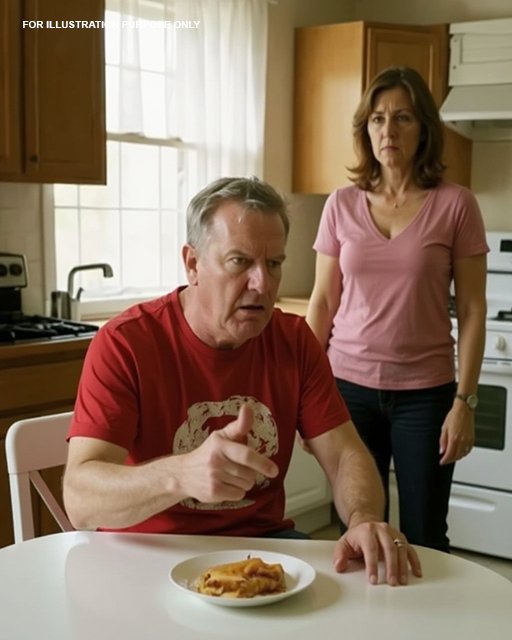
But this wasn’t about nourishment—it was about strategy. The first night, I cooked a massive roast chicken with potatoes and carrots. It was golden and fragrant, the kind of meal that fills the whole house with comfort.
My stepdad dug in like it was the best thing he’d ever eaten. “This,” he said, pointing his fork, “is what a real dinner looks like.”
I smiled sweetly. “Glad you like it.”
The second night, I cooked beef stew.
Slow-simmered, tender, rich with herbs. Again, he devoured it, proclaiming it better than the chicken. By the third night, I made lasagna.
Layer upon layer of pasta, ricotta, and meat sauce. He practically licked the plate clean. Each day, I made something extravagant, something that required hours of work.
And each time, he basked in it, smug and satisfied, as if the universe was finally aligned with his worldview. But here’s what he didn’t know: I was making double portions of everything. Half of it went straight into the fridge, carefully stored in containers.
By the end of the week, I had a lineup of dishes ready to go. On Saturday night, after another “perfect” dinner, I leaned back in my chair. “You know what, stepdad?” I said casually.
“I think I’m getting the hang of this cooking thing. I’ll keep doing dinner next week.”
He smirked. “About time someone in this house stepped up.
Maybe you’ll learn what real responsibility looks like.”
My mom gave me a worried glance, but I winked at her. Sunday rolled around, and I pulled out the roast chicken I’d made six days earlier. I reheated it carefully, brushed it with butter, and served it with freshly chopped herbs to make it look brand new.
My stepdad sat down, took one bite, and sighed happily. “Now this is cooking,” he said. I bit back a grin.
Monday, I reheated the beef stew. Same reaction. Tuesday, lasagna.
He said it tasted even better than before. Wednesday, I presented the pasta alfredo my mom had been scolded over, except this was leftovers I had cooked myself. He didn’t notice.
He ate it all. By Thursday, I was serving him reheated stir-fry. By Friday, shepherd’s pie.
Each time, he praised the meal, never realizing he was eating the same food he had already consumed the week before. My mom caught on quickly. The first night, she raised her eyebrows at me, but when she saw his oblivious approval, she nearly burst into laughter.
She played along, helping me reheat and re-plate the meals, always adding little touches to disguise them. It became our secret game, our rebellion. The more he praised the “fresh cooking,” the funnier it became.
By the second week, I had enough courage to push further. I started labeling the containers in the fridge with the days they were made. “Tuesday—lasagna.” “Friday—shepherd’s pie.” When my mom asked if I was worried he’d find out, I shook my head.
“He won’t. He never looks in the fridge. He just expects it to appear in front of him.”
And I was right.
On the fifteenth day of my experiment, I set down a plate of stew in front of him. He dug in, nodding in satisfaction. “Perfect,” he said.
“This is how dinner should taste. Fresh. Homemade.
Not like that reheated junk.”
I couldn’t hold it in anymore. I leaned my elbows on the table and smiled. “Funny you should say that.
You’ve actually been eating reheated leftovers for two weeks.”
He froze, spoon halfway to his mouth. “What are you talking about?”
“Every meal I’ve served you since last Sunday has been made from leftovers I cooked the week before. The roast chicken?
That was six days old when you ate it. The stew? Eight days old.
The lasagna? Over a week.”
His face turned red, then pale, then red again. “You’re lying.”
I opened the fridge and pulled out the containers, lined them on the counter like evidence in a courtroom.
Each one was labeled with the date. “See for yourself.”
My mom covered her mouth, trying not to laugh. He stared at the containers, then at me, then at the half-empty bowl of stew in front of him.
“You tricked me.”
I shrugged. “No, I just gave you what you asked for. Fresh meals every day.
Or at least, that’s what you thought. Turns out, you couldn’t even tell the difference.”
The room went silent except for the sound of his spoon clinking against the bowl. He didn’t finish his dinner.
That night, my mom came into my room, tears in her eyes—but this time, they were from laughter. “You should’ve seen his face,” she whispered. “I don’t think I’ve ever seen him so speechless.”
“Maybe now he’ll stop treating you like you’re his personal chef,” I said.
She hugged me tightly. “I don’t know what I’d do without you.”
After that, something shifted. My stepdad never admitted he was wrong—men like him rarely do—but he stopped making his “fresh food” demands.
He still sat at the table like a king, but the air was different. He didn’t push his plate away when something wasn’t perfect. He didn’t sneer when my mom reheated leftovers.
He ate, sometimes in silence, with forced compliments, but never again with the smugness of someone issuing orders. And my mom? She began to laugh more.
She started cooking when she wanted to, not because she was expected to. Sometimes she made big meals, sometimes she reheated. Sometimes she ordered takeout.
And I noticed something important: he ate it all. Because deep down, he’d been humbled. He learned that food doesn’t magically appear out of nowhere, that cooking takes time and effort, and that leftovers are not a sign of laziness but of resourcefulness.
He never thanked me, of course. But I didn’t need his thanks. The victory wasn’t his acknowledgement—it was the way my mom stood taller, laughed louder, and looked less afraid.
And for me, that was enough. Because sometimes, the best way to teach someone humility isn’t by shouting or fighting—it’s by letting them trip over their own arrogance. And when he did, it was leftovers that brought him down.