
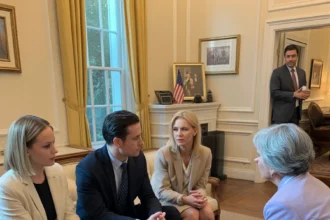

“She was here for four months,” she said. “Came in with bruises and two cracked ribs.”
My stomach turned. “She didn’t want to report anything.
Didn’t want anyone to know where she was. Especially her boyfriend. She said he had people watching.”
I was speechless.
I’d suspected her boyfriend was no good, but I didn’t know it was that bad. Anca sipped her coffee slowly. “I didn’t think she’d leave without telling me.
But some women… when they’ve been scared for that long, they don’t trust anyone. Even the people trying to help.”
I left the meeting with my head spinning. When I got home, Mara wasn’t there.
Her door was open, but her bags were still in the corner. The untouched tray was still sitting by the wall. She didn’t come back that night.
The next morning, I heard the front door creak open. I stayed in the kitchen, pretending to read the newspaper. She walked in quietly, barefoot.
Her hair was wet like she’d been out in the rain. “Do you want tea?” I asked. She didn’t answer right away.
Then she nodded. We sat in silence for a while. She kept looking at her hands.
Finally, she said, “You opened my bag.”
It wasn’t a question. “I did,” I said softly. “I was worried.”
She looked down, then whispered, “I didn’t know where else to go.”
I nodded.
“You don’t have to explain. You’re here now.”
She didn’t cry, but something in her face softened just a little. Over the next few days, she came downstairs more often.
She started eating small meals. She even asked if I had any old pajamas she could borrow. One evening, we were both watching a rerun of a silly cooking show when she said, out of nowhere, “He took everything.
My passport. My money. My phone.”
I muted the TV.
“I believed him when he said he loved me,” she continued. “But it was control. Always control.
Who I talked to. Where I went. What I wore.”
She looked over at me.
“And I hated you… because you were safe. And I didn’t know how to feel safe anymore.”
I wanted to hug her, but I waited. Instead, I said, “You can start over.
We’ll figure it out.”
Over the next few weeks, she started seeing a counselor Anca had recommended. I drove her there and back every Tuesday. She got a part-time job at a florist.
She smiled once. A real smile. Just a little one, but it lit up the room.
One day, as I was folding laundry, I found a small box in the dryer. I opened it. Inside was a chain with a tiny gold heart.
I hadn’t seen it in years. Paul had bought it for Mara’s sixteenth birthday. I thought she threw it out long ago.
Later that night, I left the box on her pillow. A few days after that, I found a note in my sock drawer. It said: I’m sorry it took me this long to come home.
That morning, we made pancakes together for the first time. Life started settling into a quiet rhythm. She was healing.
I could feel it. She even started planning to move into her own place. A little studio near the florist shop.
I helped her look for second-hand furniture and even found an old table she could repaint. But then something happened. One rainy afternoon, I heard yelling outside.
When I peeked through the curtains, I saw him. Radu. Leaning against a black car, arms crossed, looking straight at the house.
Mara froze when she saw him. “How did he find me?” she whispered. I called Anca.
She told us to stay inside and not answer the door. She called the police. When the officers arrived, Radu was gone.
But they found a tracking device under my car. We were both shaken. Mara spent that night curled up on the couch with a blanket, eyes darting at every sound.
I stayed up with her, reading out loud from an old book of poems. The next day, we filed for a restraining order. The police helped us contact a legal aid group.
They were fast. Within two weeks, the order was granted. That was the twist in our story.
The moment where everything turned. Mara decided to speak up. Not just for herself, but for others too.
With Anca’s help, she started volunteering at the shelter. She began sharing her story in private sessions. Then, one day, she asked if she could speak at a local event about domestic abuse awareness.
Her voice shook, but she did it. “I used to think I was weak,” she said into the microphone. “But leaving was the strongest thing I’ve ever done.
And so was coming home.”
I cried that day. Not because I was proud—though I was—but because I saw her truly free for the first time. Months passed.
Her little apartment became cozy and bright. She painted the old table pale blue. Added some yellow flowers in a glass jar.
She still visits every weekend. We bake, laugh, and sometimes just sit quietly together. We never talk much about the early days.
But sometimes, she’ll reach over and squeeze my hand, and I know that means everything. She’s found peace. And so have I.
Life doesn’t always go the way we plan. Sometimes, it bends us and breaks us. But sometimes… it brings people back together in ways we never expect.
Mara didn’t come back to ask for help. She came back to find home again. And this time, I think she really found it.