



Meanwhile, Callie stared at her plate during dinner, pushing food around without saying a word. That night, she texted me: “She told me I’m not part of their new family. Like, I’m just extra weight.”
The final straw came not long after.
Callie had spent her Saturday curled up in her room, sketching in her journal, trying to make herself as small and quiet as possible. Dad and Serena had been out for the weekend, but they came home early. The first thing I heard, later recounted by Callie through tears, was Serena’s sharp voice cutting through the hallway:
“What’s that smell?
Ugh. Has she even opened a window?”
Her heels clicked down the hall. The creak of Callie’s bedroom door followed.
“Still here?” Serena sneered from the doorway. Callie, startled, looked up. “Where else would I be?”
Serena stepped inside, her face twisted in disapproval as her eyes scanned the room.
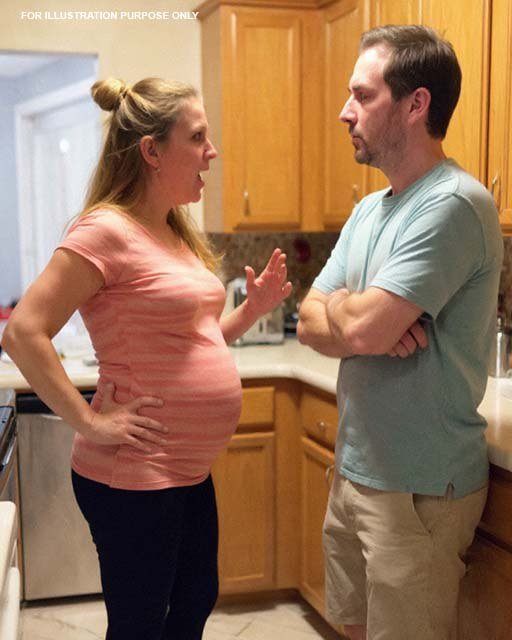
“We need more space. You’re taking up an entire bedroom, and I’m carrying two babies. Not to mention all this clutter.
Journals, art supplies, those dusty boxes of your mom’s junk…”
Callie’s voice trembled, but she stood. “That’s not clutter. That’s our life.”
Serena smirked.
“Was. Your life was here. Now it’s about my family.
You take up too much space, Callie. And I’m not letting it continue. Not anymore.”
Her words sliced through the air, cruel and final.
She shouted down the hall for my dad. “Martin! Tell your daughter she needs to leave!”
And Dad… he didn’t fight.
His voice came back small, worn down. “Maybe it’s for the best, Cal. Just for a little while.”
That night, at 9 p.m., my phone rang.
Callie’s name lit up the screen. I was folding laundry when I answered, but I froze at the sound of her sobbing. “She kicked me out,” she managed between breaths.
“She said I’m in the way. That there’s no room for me anymore.”
My chest tightened. “Where are you right now?”
“Aunt Marcy’s,” she whispered.
“Dad didn’t even stop her. He just stood there.”
I swallowed the anger burning through me. “Don’t worry, Cal.
I’ll take care of it. I promise.”
The next morning, I drove straight to the house—the one Mom had filled with music and vanilla candles, where laughter used to echo. Now it smelled of sterile citrus and looked like a staged showroom.
Serena was in the kitchen, lounging in silk pajamas, spooning yogurt like she was royalty. “Well, well,” she said, smirking. “Look who decided to visit.”
“I’m here to pack,” I said coolly.
She raised her brow in triumph. “Perfect. You can grab Callie’s stuff and take it to your aunt’s.”
But I stepped forward, slow and deliberate.
“That’s not whose things I’m packing.”
Her face faltered. Without waiting, I strode down the hall and into the master bedroom. Serena’s slippers slapped against the floor as she followed, sputtering.
“Excuse me? That’s my room!”
I flung open her closet, grabbed one of her Louis Vuitton suitcases, and tossed it on the bed. Her wardrobe of designer silks and sequins hung in neat rows.
I yanked pieces off the hangers and threw them in. “Pack light,” I said. “Travel season’s early this year.”
Her laugh was sharp and disbelieving.
“What the hell do you think you’re doing?”
That’s when Dad walked in, his face pale as if he’d seen a ghost. “Laurel? What’s going on?”
“She’s lost her mind!” Serena shrieked.
“She’s packing my things!”
I turned, arms crossed, voice steady. “That’s right. Because she’s leaving.”
Dad’s jaw tightened.
“You don’t get to decide that. This is my house.”
I pulled an envelope from my jacket pocket and set it calmly on the dresser. “No, Dad.
It’s not. Mom left this house to me in her will. You knew that.”
His hands shook as he opened the papers.
Serena’s face twisted in disbelief. “That’s impossible!” she snapped. “What’s impossible,” I said, “is you thinking you can throw a grieving teenager out of her own home.
You told Callie she takes up too much space? Serena, you never belonged here.”
Her face burned red. She turned to Dad, desperate.
“Say something!”
But he said nothing. His mouth opened, then closed. “I’m pregnant!” she screamed.
“You can’t just evict me!”
“Watch me,” I said flatly. Her threats of lawyers, her tantrums, her tears—none of it mattered. The will was airtight.
This house wasn’t hers to control. It took two days. I stayed in the house, slept in my old room, and made sure Serena actually packed and left.
She slammed doors, cursed under her breath, cried until her mascara streaked, but in the end, the SUV sat packed in the driveway, every box labeled in her neat pink Sharpie: Skin Care, Workout Gear, Twin Stuff. When Callie arrived with Aunt Marcy, she looked unsure, clutching her suitcase like a shield. “You really did it?” she asked softly.
I smiled and pulled her into a hug. “Every last bag. This is your home, Cal.
Always has been.”
Her shoulders loosened, and for the first time in months, I saw relief on her face. Serena didn’t speak when she left. She wore oversized sunglasses, chin tilted high, pretending she wasn’t defeated.
As the SUV pulled out, she glared through the window, and I couldn’t resist waving. The house felt lighter immediately. Quiet, but not empty.
That afternoon, Callie and I unpacked her things, returned Mom’s photos to the walls, put her journals back on the shelves. She taped a picture of Mom laughing on her bedroom door—the last birthday we’d celebrated together. “Do you think she’d be proud of us?” Callie asked later.
“I think she already is,” I said. “But let’s make sure this house feels like hers again, just in case she’s watching.”
That night, we made grilled cheese and tomato soup, just like Mom used to. We lit her vanilla candle, played her favorite Sade record, and let Olive snore at our feet while Callie sketched at the table.
No confetti, no celebration. Just two sisters reclaiming the space Mom left us, finally breathing again in the home that was always ours. For the first time in a long time, the silence wasn’t heavy.
It was warm. Full. And that was enough.