



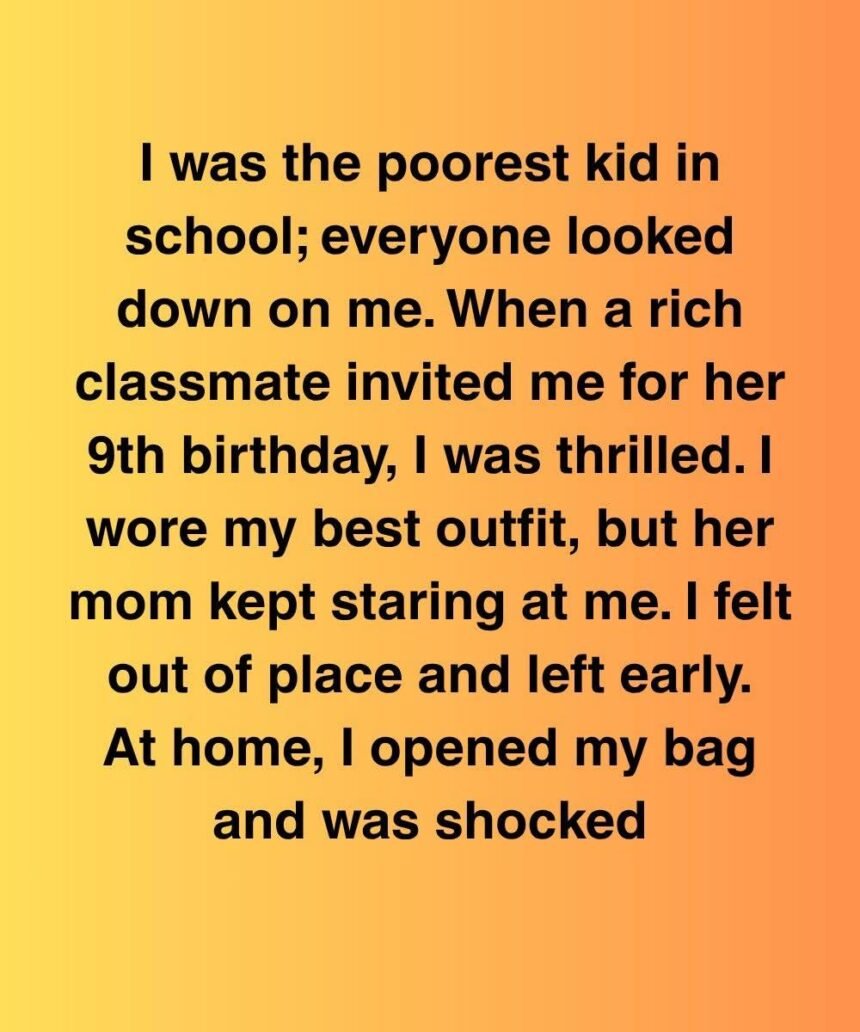
My ears burned. I wanted to storm out and yell at her in front of everyone, but I stopped. Nobody had believed me before—why would they now?
I needed proof. So I waited. The next day, I asked Ananya for help.
We started paying attention to Zariah during lunch. She loved pulling small tricks—switching people’s pencils, hiding their lunch boxes. Nothing major, but it showed a pattern.
Then, one Friday, we got lucky. Zariah snuck a hair clip from another girl’s desk and put it into someone else’s backpack. This time, Ananya had her phone out, recording because she’d been trying to film parts of lunch for a “day in the life” project.
She caught the whole thing. I knew it wasn’t the same as the birthday pouch, but it was enough to show her behavior. We brought the video to the teacher.
This time, she couldn’t ignore it. There was a meeting with Zariah’s parents. The teacher didn’t bring up my incident directly, but I saw her glance at me when she explained how wrong it was to accuse someone without proof.
Zariah was told to apologize to the girl she’d framed. She mumbled a sorry, barely audible. That weekend, I thought a lot about whether to bring up my own story.
But then something unexpected happened—on Monday, Zariah avoided me completely. And a few kids who had ignored me before started talking to me again. They didn’t say they were wrong, but they stopped calling me names.
Life didn’t go back to how it was before. In some ways, it was better. I had fewer friends, but the ones I had were real.
Ananya and I grew close. We started doing school projects together, even hanging out at each other’s houses. Years later, I still remembered the birthday party, the pouch, the stares.
But I also remembered the moment I realized that some people will never admit they were wrong—and you don’t always need their admission to move on. One summer, after graduating college, I came back to my hometown to visit my mom. I stopped at the local café and saw a familiar face behind the counter—Zariah.
She looked surprised to see me. We chatted politely. She mentioned she was saving up to go back to school.
There was no trace of the rich, untouchable birthday girl anymore. When I left, she called after me. “Hey… about that birthday thing…” She paused.
“I was a kid. I was stupid.”
It wasn’t an apology wrapped in tears or deep regret, but it was enough for me. I just nodded and said, “We were kids.
It’s fine.” And for the first time, it actually was fine. That day, I realized that holding onto bitterness only weighs you down. The people who wronged you may never pay in the way you imagine, but life has a way of balancing things out.
Zariah had gone from being the center of attention to blending into the background, while I’d built a life I was proud of. If I could tell my younger self one thing, it would be this—your worth isn’t decided by people who misunderstand you. Sometimes, the best revenge is simply living well and letting time do its work.
We can’t control how people treat us, but we can control how much space we let them take up in our lives. And sometimes, that’s all the closure you need. If this story hit a nerve, share it with someone who’s ever been unfairly judged.
Maybe they need the reminder too.