



“You’re tougher than this place, Nix. But we need you.”
I know she means well, but sometimes those words feel heavy.
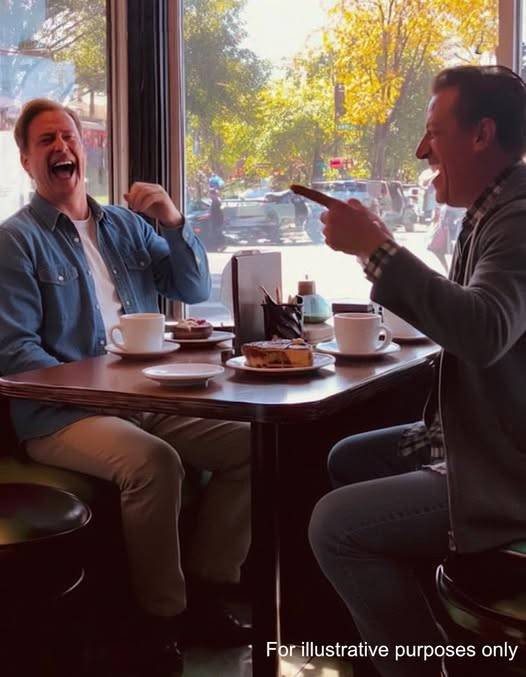
I brought their coffee and two slices of chocolate cake I’d picked from the display case. They were the softest ones, baked fresh that morning by Vey.
They ate them without a thank you, still laughing between bites.
I caught bits of their talk as I refilled water at nearby tables. Words like “divorcee,” “charity case,” and “probably never went to college” drifted over, each one a small cut. I’d been doing this job long enough to know some customers just want someone to look down on.
It makes them feel bigger, I guess.
I tried not to let it hurt, but after eight months of this, after five years of doing everything alone, after 40 years of trying to prove I’m worth something, those words still cut deep. When I brought the check, the older one pushed it back without looking at me.
“We’re not paying for this.”
“Excuse me?” I blurted out. “The coffee tastes like dirt,” the other said flatly.
“And the cake’s dry as cardboard.
You should comp it. We’re not paying for trash.”
My throat tightened. Tears burned behind my eyes, but I wouldn’t let them fall.
Not here.
Not for them. I stood there, tray shaking in my hands, watching them get up from the booth, still laughing like this was the funniest thing all week.
Then everything stopped. They froze, their laughter cut off suddenly, faces going pale as they stared at something behind me.
The younger one even stepped back.
I turned slowly, heart pounding, and saw him. He was a broad-shouldered man in a faded army jacket, the kind that had seen real wear. His hair was short, silver at the temples, his face worn in a way that told stories without words.
His expression was calm, but it had a weight that made people quiet down fast.
He held his coffee mug, the same black coffee he always ordered, and stared straight at the two men. “Is there a problem here, gentlemen?” he asked.
The older man cleared his throat. “Look, this doesn’t concern you.
We’re just having an issue with the service, and we’re well within our rights to—”
“Your rights?” The man’s voice stayed even, but it shut the other guy up.
“You think you have the right to make fun of a woman working two jobs to feed her kids? You think you can steal from a small business because you feel like it?”
“We’re not stealing,” the younger one said weakly. “The food was terrible, and we shouldn’t have to pay—”
“Stop talking.” The words were quiet but firm.
He took a step forward, and both men backed up without thinking.
“I’ve been sitting here for 30 minutes, hearing every mean comment you made about her age, her life, her choices.”
He paused, his stare making even me uneasy. “You know what I see when I look at you two?” he went on.
“Weak men. Men who’ve never worked an honest day, never sacrificed anything real, and think money lets them treat people like garbage.”
The older man opened his mouth, but the man raised a hand.
“You sure you want to keep talking?” he said, voice lower now.
“Where I come from, men don’t laugh at women working hard for their kids. They respect them. They honor them.
Or they get out.”
The diner went silent.
Even the kitchen noise stopped. I could hear my own heartbeat.
The two men looked at each other, then back at him. All their self-important confidence drained away.
The older one’s hand shook as he reached for his wallet.
“Look, we don’t want trouble,” he said, voice small. “Then pay your bill,” the man said simply. The guy pulled out several $20 bills and dropped them on the table, struggling with the cash.
A $50 bill landed on top.
“That’s for the meal and the tip,” he muttered, avoiding eye contact. “Keep the change.”
“Now apologize,” the man said.
Both turned to me, fear in their eyes. “We’re sorry,” the younger one said fast.
“We were out of line.
The food was fine. Everything was fine. We’re… just going now.”
They practically ran for the door, tripping over each other to get out.
The bell above the entrance chimed as they left.
I stood there, still holding my tray, trying to make sense of it all. Then I turned to the man who’d stepped in.
“Thank you,” I said quietly. “You didn’t have to do that.”
He shrugged, a small gesture that said everything.
“Ma’am, I’ve seen worse men than them put in their place a lot faster.
I just did what’s right.”
“Still,” I said, pausing to swallow the lump in my throat. “Nobody’s stood up for me like that in a long time.”
He smiled. “Then people haven’t been paying attention.
Anyone can see you’re working hard and doing your best.”
I didn’t know what to say.
I just nodded, scared I’d cry right there on the diner floor. He picked up his coffee mug and went back to his booth in the corner.
As he passed, he said softly, “Have a good rest of your shift, ma’am.”
I watched him go, this stranger who saw me when I felt invisible. For the first time in months, maybe years, I felt hopeful.
After that night, things started to shift in ways I never expected.
He came to the diner more often, always polite, always in the same booth by the window where those suits had sat. He didn’t talk much at first, but he always left a good tip and asked about my kids. Eventually, I learned his name was Hul.
He was a veteran, recently retired after years of service, living alone in a small apartment a few blocks away.
He said he liked the quiet of living alone, but the coffee at Miller’s was better than sitting in silence. Over weeks, it became routine.
I’d refill his cup before he asked, and he’d give me that small, grateful smile that said more than words could. We’d talk about little things — the weather, news, my kids’ latest school stories.
One night after closing, I walked out to find him waiting by the door.
My heart jumped until he spoke. “Thought I’d walk you to your car,” he said simply. “It’s late, and this neighborhood’s not the safest.”
There was no expectation in his voice, no hint of wanting anything back.
Just respect.
Real, steady respect I hadn’t felt from a man in years. Over the months, something changed.
The morning smiles, the shared jokes, the notes he’d leave on napkins saying, “Keep your head up.” It all built something between us. It wasn’t sparks or big declarations.
It was peace.
The kind that comes quietly when you’ve been tired and alone too long. Now, on my nights off, Hul takes me and the kids for ice cream downtown. Jex calls him “sir” in that serious way eight-year-olds do when they admire someone.
Ziv acts too cool to like him, but I catch her smiling when he says she’s smart like her mom.
Those self-important men thought they could make me feel small. Instead, they gave me something I didn’t know I needed.
They brought Hul into my life, and that changed everything.