



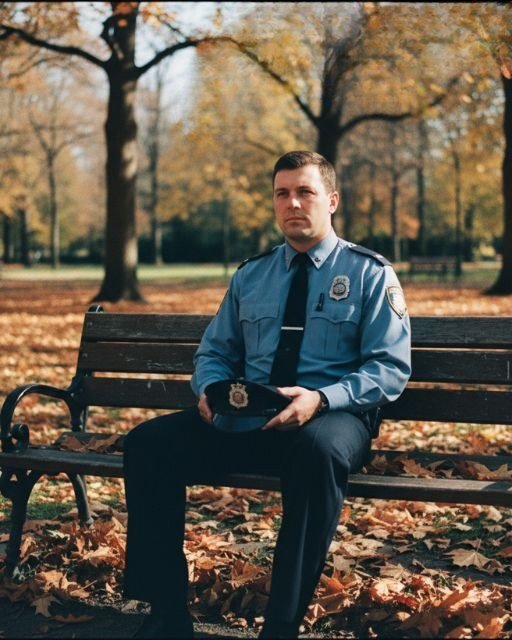
My brother has worn that uniform for as long as I can remember. Growing up, I thought it made him a hero—the one who would dash out mid-dinner, vanish during birthdays, leaving Mom standing in the doorway with a cold plate of food, waiting for him to return. At first, his wife understood.
She would smile, tell everyone she was proud, and say, “Sometimes the city needs him more than we do.” But as the years passed, so did the empty chairs at school recitals, the missed anniversaries, and the unanswered calls when she pleaded for him to come home. I noticed it in her eyes before he did—the slow drift from pride to quiet resentment. Then one rainy evening, I stopped by his house to drop off a few things for my niece.
I expected to see him on the couch with his radio buzzing. Instead, the living room was empty. His wife sat at the kitchen table, a stack of unopened bills before her.
She didn’t notice me at first, lost in her phone, thumb hovering like she couldn’t decide whether to call someone. I cleared my throat, and she jumped, then gave me a tired, strained smile. “He’s on shift again?” I asked.
She nodded. “Double. Might not be back tonight.”
Her voice cracked on the last word, and I realized this wasn’t just resentment anymore—it was exhaustion, defeat.
My niece padded in with a half-colored drawing, proudly showing me a picture of the family. I couldn’t ignore the tiny figure in uniform, standing far off in the corner, distant from the rest. Driving home that night, I kept thinking: my brother always said he ran when duty called.
But what about when his family called? What about staying when they needed him? A week later, everything broke.
It was Sunday, a rare night when the whole family gathered at Mom’s. My brother arrived late, still in uniform, and the room lit up for him. People always did.
But his wife didn’t. She barely looked at him. When he tried to kiss her, she turned her face just slightly, a clear refusal.
Dinner was tense. Mom asked about work, calls, people he’d helped. He replied like always—short, proud.
His daughter quietly pushed peas around her plate. Then his wife set down her fork. Calmly, she said, “Do you even realize what you’re losing?”
The room went silent.
He froze, fork in hand. “Every time you run out that door, you think you’re saving someone. But you’re leaving us behind.
Your daughter barely knows you. She draws you like a stranger.”
He muttered about responsibility, about having no choice. “You do have a choice.
You just don’t choose us.”
She stood, took their daughter’s hand, and walked out—right in front of everyone. He didn’t follow. He sat, stiff, staring at his plate.
Mom urged him, but he shook his head. “She’ll come back. She always does.”
But she didn’t.
Not that night. Not the next. Weeks passed, and he convinced himself it was temporary, throwing himself into work, extra shifts, every call.
But when I visited his wife, I realized she had her own life—her own keys, schedule, peace. I tried talking to him. “They need more than a paycheck,” I said.
The story doesn’t end here — it continues on the next page.
Tap READ MORE to discover the rest 🔎👇